Cream / minimal exposure
A quieter, more uniform-looking surface that keeps much of the concrete’s top layer. Existing flatness and surface condition determine whether this look is achievable.
 Commercial
A clean architectural look, natural variation and a finish that feels part of the building. Concrete polishing starts with the slab you have and the space you want to create.
Discuss your concrete floor ↗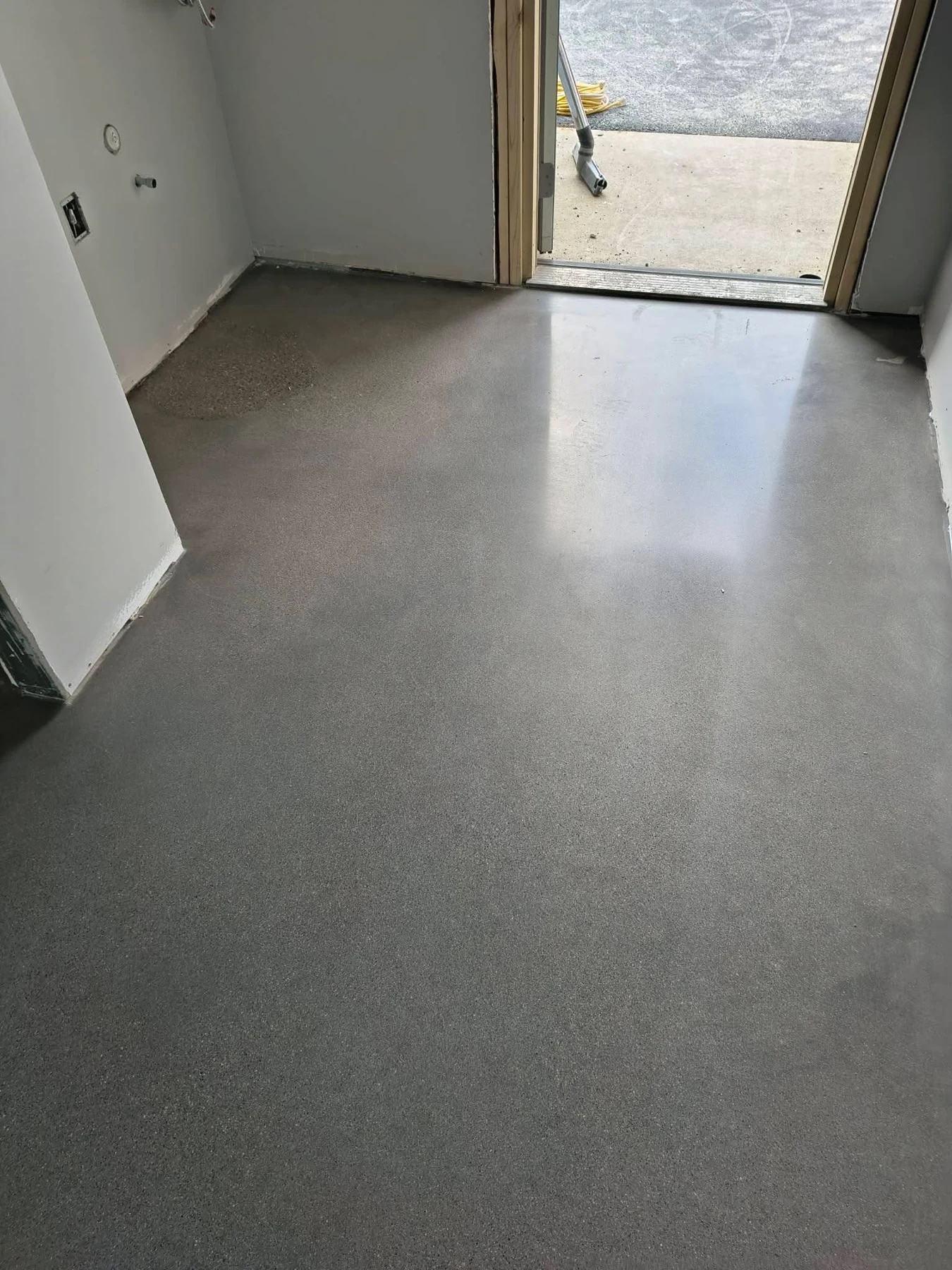
Polished concrete works with the existing slab rather than covering it with a decorative flake or metallic layer. It can suit spaces where the concrete itself is part of the design: a retail interior, studio, workspace or contemporary home.
The slab, aggregate, previous coverings and repairs influence what can be achieved. We talk through exposure, sheen and expected variation before settling on a scope, so the result feels intentional.
Colour variation, joints, repairs and aggregate can remain visible. An assessment helps distinguish attractive character from issues that need treatment.
Bring reference photos of the look you like. We’ll discuss what is realistic for your concrete.
Aggregate is the sand and stone inside the concrete. Grinding depth determines how much comes into view. Choose the character first; the level of shine is a separate decision.
A quieter, more uniform-looking surface that keeps much of the concrete’s top layer. Existing flatness and surface condition determine whether this look is achievable.
A light reveal of fine sand and small aggregate gives the floor subtle speckling and more natural texture in its appearance.
A deeper grind reveals more of the larger stone for a bolder, more varied look. The concrete mix determines the stone’s colour, size and distribution.
The existing slab determines the achievable result; a sample area helps agree the look.
After the exposure is established, progressively finer tooling refines the surface. Lower-grit honing gives a softer look; finer polishing can build reflection and clarity.
A low-reflection starting point for an understated finish.
Further refinement toward a soft, low-sheen appearance.
A finer polishing stage that begins to build more visible reflection.
Further refinement for greater clarity and a more reflective look.
A fine polishing stage used to develop a highly reflective finish.
Available in some finer pad systems for additional gloss refinement. This is not a necessary step for every polished floor.
A guide, not a fixed gloss scale. Grit ratings differ between tooling and pad systems. The concrete, preparation and full process affect the result; a higher number alone does not guarantee a better floor. We agree the exposure and finished appearance for your slab, then specify the appropriate process.
They can share a similar visual direction but are different finishes. Mechanically polished concrete is refined through a specified abrasive process. A ground surface finished with a topical clear coat relies on that coating for its final finish. The preparation, maintenance and appearance can differ.
We explain which approach is being recommended and why. Your quote will describe the selected process, the intended finish and the care it needs.
Explore recolouring and sealing ↗Review the slab, previous finishes, visible repairs, access and the desired result.
Confirm the process, finish expectations, area, edge work and project timing before installation.
Complete the agreed work and discuss care, protection and return-to-use requirements.
Suitability varies. Existing finishes, contamination, repairs, slab quality and the desired exposure all matter. We assess the floor before confirming whether polishing is a good choice.
Not necessarily. Repairs may remain visible and joints still need to be considered. We discuss those features early so expectations match the actual slab.
Area, access, coating removal, repairs, edge work and the level of preparation and finish influence the scope. Send your community, intended use and approximate area to start the conversation.
Cleaning and maintenance should follow the recommendations for the installed finish and protective products. We explain the suitable routine at handover.
Tell us what you want to change, your community and preferred timing. Rough square footage is helpful if you have it. We’ll discuss the next step and the assessment needed for your quote.
Request a recommendation ↗